Project

Johhan Rosenberg, Sille Pihlak, Karl Joonas Alamaa, Hendrik Kaljujärv

Night’s due
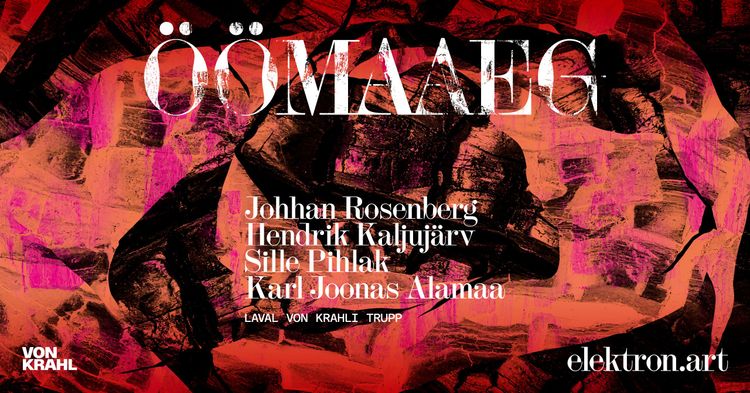
13. April 16:00-18:20

Choreographer:
Johhan Rosenberg
Architect:
Sille Pihlak
Costume design:
Karl Joonas Alamaa
Composer:
Hendrik Kaljujärv
Light designer:
Priidu Adlas (Estonian Drama Theatre)
Dramaturgs:
Nele Tiidelepp and Rauno Zubko
Performers:
Liisa Saaremäel, Markus Andreas Auling, Karl Birnbaum, Kristina Preimann, Herman Pihlak, Edgar Vunš and Folk dance company Pääsuke dancers
Light:
Magnus Voogla
Sound:
Jürgen Reismaa
Prop master:
Kristiina Praks
Designer:
Jaan Evart
Production:
Kaie Olmre, Jaak Prints
Production assistance:
Tuule Jõks, Carmen Mölder
Communication and marketing:
Katrin Tomiste
Stage:
Rinald Kodasma, Margus Terasmees, Hannes Närep, Magnus Voogla
Seamstresses:
Agne Talu, Katrin Rätte, Jürgen Sinnep
Engineer:
Adam Orlinski
Builders:
Tektuur (Päär Keedus, Johann Ortin Õun, Ardo Hiiuväin)
Thanks:
Linda Mai Kari, Thermory, Netti Nüganen, Anne Türnpu, Otto Antson, Rasmus Linde, Haine Paelavabrik, Omaking
Supported by:
Cultural Endowment of Estonia, City of Tallinn, Estonian Ministry of Culture
Nights Due is a co-production between Von Krahl Theatre and elektron.art.
The performance lasts 2’20 with an intermission.

…bodies gather and seek shelter before the night disperses.“The night’s due” is an invitation to a nocturnal refuge. This is the time of the night, a dance in the darkness, until the rhythm decays. These movements can’t be archived, because they can’t be seen. Coming together as a practice older than language. Patterns and rhythms that repeat year after year, cycles of eating and drinking, birth and death, sex and bodily circulation.

The night becomes a sanctuary, holding knowledge that daylight has cast aside. This moment gives the night its due: honoring it as a cradle and refuge for all that daylight denies. These are practices that resist capture; subcultures, informal rituals, migrant bodies, folk forms, and collective behaviors that are lived but rarely archived. Movements that dislocate authorship, or institutionalised memory. Nights persist because they are repeated, absorbed, and transmitted between bodies. Folk here is a migratory one — shaped by displacement, survival, adaptation, and repetition.